
Job’s Tears: Gardening for Crafters
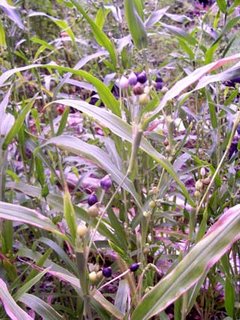 We will need to take another small break from the tomatoes. Mother Nature has conspired against my Tomato Tastings and had left me with no ripe tomatoes that I have not yet reviewed. I think we should be back in tomatoes in just a day or two.
So, tonight, I will be talking about the other prolific crop I have growing in my garden – Job’s Tears.
If you are a crafter, you need to grow these plants. But before we get into why, let me tell you a little more about them.
The first time I saw these, I was 9 years old at a Girl Scout meeting, looking pretty damn smart in my green jumper by the way, and the troop leader brought out a big bowl of white, grey and black beads. They were shiny, hard fossilized tears. At least that is what they looked like. I made a necklace and the location of that necklace has been lost to time and, most likely, a cleaning binge on my mother’s part.
Fast forward 20 years. I remembered those funny beads. And I remembered that Dottie, my troop leader, had said that they weren’t beads, they were seeds that could be used as beads. A little research on the internet and I found that they were Job’s Tears. Finding a supplier for the seeds of Job’s Tears was a bit harder, but I did eventually find one.
Job’s Tears are a member of the grass family, more specifically, they are a very close relative to corn. As a matter of fact, in some parts of the world, it is also called “Mother of Corn”.
These hard little bead seeds are actually not just seeds, they are technically a flower as well. The female flower is contained inside the seed, rather than above or below the seed or seed pod. When the seed is fertilized, the seed swells around the flower.
What makes this plant Nature’s gift to beaders and crafters is the fact that the male flower grows up through the center of the seed and grow above the seed. You can kind of think about it like the cob on corn, except that it is thread slender and, more importantly, removable.
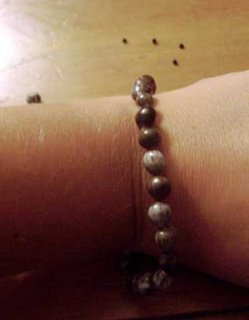 So, without any effort on anyone’s part, other than planting them in the ground, this plant grows a polished, drilled bead that makes wonderful jewelry, rosaries and accents. Evolutionary survival at its finest.
In Europe and North America, that’s about as far as Job Tear’s uses go. But remember, it is a relative of corn. In Africa and Asia, this plant is used as food and drink, as well. It can be ground into meal, eaten whole or brewed into a beer or used as a coffee substitute.
In Africa, these little seeds are even used to make traditional musical instruments.
Now, here is the really weird part. These are tropical plants. They should not plant themselves here in cold winter Cleveland and, yet, I have an entire bed of these that grew from volunteers. They volunteered so heartily, that my garden has made the military decision to treat them as weed combatants next year.
I already have a giant bag of these things and, let’s face it, there are only so many necklaces and bracelets one can make for personal friends and kid’s teachers before you start to get that dreaded tight lipped smile when people get them as gifts. Really, the problem is more with me, I am not a creative person with my hands. Bracelets and necklaces are about all I can handle.
But you ladies and gents out there who make such wonderful things with everything under the sun, you might like these.
Or if any of you out there happen to be a Girl Scout leader… you might just possibly plant a seed of gardening wonder in a young girl’s mind.
A very lovely story Hanna, I just bought some of these seeds to try to cultivate under grow-lights then plant out. Just for information, I got my seeds in the UK from Chiltern Seeds (https://www.edirectory.co.uk/chilternseeds/).
Hope this helps any other readers who are inspired to grow some of these for themselves 🙂
I have some job’s tears and the seeds are turning brown. Is this the right time to pick them or do I need to wait a little longer. Your insight would be greatly appreciated.
I normally pick mine when they turn dark brown or black. You can easily tell when they are ready to harvest because the seeds will litterally fall off in your hands when you touch them.
I really enjoyed Hanna’s article & photo. I first learned about this plant last Saturday, September 8th. My wife Janet & I drove to Archbold, Ohio on Friday, sharing overnight accomodations @ Sauder’s Heritage Inn, with her cousin Nancy & husband Len. On Saturday morning we visited Sauder Village & while at the farmhouse, Len & I wandered into the garden. We could recognize most, if not all, of the plants, except for one which was growing close to the fence. I pulled a small sprig, with the “berries” on it & took it into the farmhouse to inquire what it was. The plant looked like a large clump of miniature corn plants, with tassels of green, brown & gray “berries” on top (exactly like the photo in Hanna’s article). One of the ladies working in the farmhouse told me the plant was called “Job’s Tears” & she showed me how to pull the center part right out of the “berry”. She said that pioneers in Ohio used them as jewelry. She allowed Len & I to take a few sprigs home with us (his to Illinois, mine to Michigan). I planted mine that same day, in full sun & hope that they survive & grow in spring. I also planted 2 in a pot which I will also monitor closely. What a neat plant. I’m anxious to see what next spring will bring.
Good day – have just read this most interesting article. Thank you. Do you think that “Job’s Tears” can be grown in South Africa? Any idea where to get seeds from? Does anyone sell the seeds – enough to make jewellry with?
regards
Raine
King Williams Town
South Africa
They are used in many traditional African crafts, I believe, so they should grow in South Africa just fine. I know that there are seed companies that will send seeds to South Africa, but I am uncertain of craft campanies that will send enough to make crafts with.
How, when, and where do I plant the Job’s Tears seeds? I live in zone 8/9.
While on a tour of Vermillionville in Lafayette, Louisiana, this past weekend I became interested in these seeds. One of the docents sent me about 10 seeds. The rosaries she made were beautiful. She went on to tell the group about the ladies making jewelry, religious articles, etc using the seeds because that was what was available.
I’d like to try and grow more to share and use myself. Any help you can give me will be appreciated.
Sharon Lea
Zachary, Louisiana (about 20 miles north of Baton Rouge)
Treat them just like they are corn. Same planting time, same conditions and the same way as you would corn.
Since you are in a warm area, they will reseed year after year, so plant them in a place that you plant on letting them take over.
Dear Hanna,
I have a small rosary making business in New Iberia, Louisiana and grow my own Job’s Tears Seeds. My plants produce both the greyish colored seeds as well as the dark brown which can be seen on my website at http://danleaenterprises.com/Jobs_Tears.html
If anyone would like to purchase some for planting or craft making they can contact me at dpvar@aol.com, admin@danleaenterprises.com or through the “contact us” link on our website.
Sincerely,
Dana P. Varisco
Aloha Folks
Well done Hana. Nice read.
We sell Job’s Tears by the lb.
Fresh harvested, great for beading or growing.
Please check website for latest pricing.
Thank You
Allen Goodson
http://www.seedshawaii.com
Hilo, HI
My family grew these in Southeastern Ky when I was a kid many years ago. My sisters made jewelry from them—we called them “seed beadsâ€. I grow them here (east Tennessee) now too—planted them once and now get an annual crop of “volunteer’ plants, they just come up all through the garden from dropped seeds of the year before. Apparently they are edible, cooked as you would cook any other large grain. I’ve never tried personally, just grow ‘em “for prettyâ€
I am looking for either a start of the plant Job’s Tears, or seeds to begin my own… please respond if you have information.
I’m just starting to harvest the 2008 crop of seeds from my plants. As usual, the first seeds range in color from very dark brown ( almost black ) to a lighter shade of brown, almost woodgrain in appearance. These are the seeds that starting appearing in the early spring when the weather was cooler. Now that summer has arrived, the seeds that will be maturing will be the greyish ones.
My plants produce many more seeds than I can use in my rosary business therefore I sell the excess through my website. Please visit http://www.danleaenterprises.com/Jobs_Tears_Seeds.html
for more information.
Sincerely,
Dana P. Varisco
Hi,
I recently went on a pilgrimage to Medugorje,in the former Yugoslavia,(where there have been alledged apperitions of the Blessed Mother since 1981)
While in a small shop there ,I noticed some little girls making bracelets out of the seeds.I asked the woman if I can plant them.She gave me some and they are just coming up now.I can’t wait to get the seeds! How many seeds does a plant make?
I heard that this is one of the most ancient varieties of plants in the world.Another interesting fact is that Mother Theresa’s rosary was made of Job’s tears.
Hello,
We obtained some Job’s tears from SeedsHawaii of the blue/gray variety and planted them in May in South Florida in pots. The plants have continued to grow but we do not have seeds yet as of end of August. They also scorch easily. We have left the plants in 24″ diameter pots for portability (due to hurricane season and because of the scorching) but do you know if these are symptoms due to not being in the ground? Also, can someone comment on average # of seeds per plant they yield? Any suggestions on fertilizer?
Thanks,
Marta Garcia, Miami, FL
Dear Marta,
I have my job’s tears plants in large pots also. ( South Louisiana ) They are producing just fine. I think the time of year has more to do with seed production. It always slows down considerably mid to lat summer. The seeds will come.
At first you may get about 8 to 12 or less seeds per stalk. They usually don’t produce too many seeds during the first year. Eventually you should get much more than that.
Once a year I add a little miracle grow to the soil.
Hi,I also grow job’s tears in NORTHERN MINNESOTA !! Mine are over 4 feet tall in a gargen getting plenty of sunshine and water. There are over 30 seeds per 1 clump of plants. I planted 1 seed and somehow there is over 10 stalks from 1 seed as 1 plant. Mine are starting to turn from green to brown. I picked one seed yesterday that was full term. Mine are the size of large peas. I got my seeds from a Nun at a monostary in Minnesota that makes and grows job’s tears and makes rosaries from them . That is what I will do with mine also. It is cold up here right now in the 50’s and 60’s and they still seem to be growing. some stalks have them growing and looking like there are already strung. They are growing so fast. I can’t wait till harvest time which will be soon. I started my plants the middle of May inside in pods and waited till they were about 8 inches tall and frost was gone before I planted them. When transferring you always have to take the mesh from the pods before you put them in the garden. I learned that the hard way. Last year I planted over 100 of them and didn’t take off the mesh. they only got 18 inches tall and only produced 3 seeds. bummer. this year I have a good crop. I used fertilizer the first month or so after planting to get them a good start. and weeded the garden. It is nice to be able to grow my own “beads” for my rosaries. Good luck future growers.
If you want a really great catalogue that sells Job’s tears, get one from Baker Creek Heirloom Seeds. Their website is http://www.rareseeds.com.The seeds are $2.00, but if you get the catalogue, you will surely order many more items from this unusual catalogue which sells seeds from Asia, South America, Germany, and so on. The pictures are gorgeous, and the stories and quotes are wonderful. You can view most of the flowers/vegetables on line.
Cathie Smith
I am looking for seeds to plant for jobs tears but cannot find them…please help me since it would be honoring a great friend whom is no longer in my life. I also would like to begin a new tradition in my family of making bead chains and musical instruments to share with local charities and organizations who utilize handmade instruments. please contact me soon thank you.
pam graden,
lacon, illinois
My jobs tears are in full bloom; however, they are turning yellow to white and drying up on the vine… please can someone tell me what is wrong.. too much or not enough water, etc. Thank you.
Aloha Carolyn,
We harvest Job’s Tears from nature in Hawaii.
We often see seeds “abort” early (turn white and dry up)when the plants are too are thick. Not all bad news, there are always some that finish out. Doubtful it is too much water as they do best here along streams and in an area of annual rainfall 100″ plus.
I am curious of your location, wouldn’t have thought you could get seed bearing Job’s Tears this early in the year, unless you are in the tropics some where. Or perhaps grew them in a green house. Please let me know if I can be of any further assistance. Allen Goodson
Thank you Allen in Hawaii…. for the information.. My plants are inside in a LARGE pot and I’m planning on taking it outside in the next two weeks. They are beautiful to date except for the drying up problem and full of tears. This is my second planting with the same problem and I only have a few seeds left to try again later. I live in The Plains OHIO about 50 miles south of Columbus, OH. It is so important to me as I remember my mother always had them when I was young, and I loved making jewelry with the different colors. Hoping to show them to my grandchildren.
What is the best time of year to begin anew. Thank you so much.
Thank you so much for this post, I’m growing this year (09) and was wondering when to harvest the beads. Thanks again:)
Aloha Carla
In Hawaii we allow seeds to mature and dry on stalk. Often the stalk is turning brown. The better Job’s Tears are mostly light gray, some with a little black. When seeds are mature they release easily. If we have to tug them at all, we leave for next harvest. Let me know if I can help further. Regards Allen
On Sept. 9, Mary stated that you have to take the “mesh” off the pods before transferring them into your garden. This will be my first time planting the seeds and so far they are just sprouting in containers and are about 6″ tall. I am wanting to get them into the ground soon, but I don’t know what is meant by the “mesh”? Can you explain, and is there anything else I should know before planting?
Thank you for any advise.
Theresa
I’m not sure what the mesh She mentioned is but I don’t find Job’s tears difficult here in Tennessee. The first year I planted them I was very careful and treated them like they were very delicate and needed nurturing. They came with instructions that includes gently sandpapering off a spot them and soaking them so they would germinate all of which I did. Apparently I was a little overboard. They are petty much like weeds in my garden now. One shiny bead hits the ground and next year you have a jungle. The only thing worse are the Touch Me Nots, mostly because their seed pods explode and shoots seeds all over. Job’s tears really don’t seem to need anything special, just dirt and water. And not always much of that.I pulled some last year and tossed them in a brush heap. This year there are Job’s Tears growing up out of the pile of old plants. Some of the seeds do go white but there are plenty of the slate gray ones just waiting to invade someplace else
In reply to Theresa wanting to know what the “mesh” was, it is the mesh that is surrounding the pods you get to plant the seeds in in trays. they come in a tray of 72 and they expand when you put the water in them. The mesh, I found, holds back the growing process so I remove it when I plant it in my garden. This year my crop failed. I planted to late and it is a very cold summer up here in Northern Minnesota. I planted mine in mid april and they aren’t even 1 foot high yet. So I may order some seeds next time to try. I tried growing seeds from my crop last year. The must not have ripened all the way when I picked them off before the frost. Some ripened on their own but others didn’t. good luck.
Mary in Minnesota.
I love all the articles that I have read on this page, very helpful. I live in Sedona, AZ. I planted 9 plants thinking I needed alot to have a small crop for harvesting…I now have 2 plants, 1 is doing good the other has a few seeds and has alot of brown leaves. 3 pants have very little green on the leaves still. very disheartening…However,I still water every day. I planted in the last of April (09). I feel that maybe I needed to plant it where there was more shade? Maybe it is not suppose to grow here cause of the direct heat?
I am Cherokee and our ledgend with these are that the plants sprang up where our tears fell as our people crossed over into the Night Land and we mourned of their passing on the Trail of Tears from back east to Oklahoma. Also the young children and women would braid small thin braids and run the braid though the end of seeds to thank Creator for this gift and to remind us of our Ancestors that are not with us at present.
Thank you everyone for these postings I never knew it grew anywhere else till lately. I would like to have 1 plant that will harvest good and not sure how to help the plant, I will go sing to it as I talk with the plant each day, any help would be great.
Wow so much great info here!!! i am in south east AZ, just about on the border. I have one plant doing great, and one that’s half that size and getting some of the little white dried up seeds on it. That one I had left in a pot for way too long, I know that much, badly rootbound. I was wondering if they need water every single day or every other day? Also when do you start cutting back on water, or do you cut back at all? Is the white dried up seeds a disease?
Aloha Sara
In Hawaii, Job’s Tears like to be kept wet. They do best along streams and ditches. It will be hard to over water.
Seeds are green, then black, and finally blue gray.
The white dried up ones are seeds that do not mature. Not sure of the reason. Could just be aborted ones or some nutrient deficiency. I see them on almost every plant.
Best of luck with all your growing. Allen
I’ve always supposed the white ones to be the ones that didn’t fertilize. You see them on most plants including very healthy ones that have lots of normal looking seeds.
Bill
This Job’s Tears in China is called “YIMI”, which can be eaten as a food like rice and proven to be a very useful traditional Chinese medicine. It can cure some kind of skin diseases and is quite good for organs of your body, such as lver, lung, spleen and stomach. It is good to be used as a thing to whiten and fine your skin as well. Anyway, it’s really a practical plant.
My job tears plant froze before they turned colors. they are still green. should I pick them or leave them to turn yet. Thanks
Darlene, if your seeds are completely green, I would leave them on the plant a while longer. If they have started to turn and are more gray / brown than they are green, you can pick them and they should still finish turning.
I have grown Job’s tears but mine were mostly white. A few were gray.
I have seen neclaces of Job’s tears in many different colors. How can they be dyed?
Hi – I came across this site while looking for information about Lagrimas de San Pedro (Job’s Tears). About 8 years ago, I was in Ecuador leading a trip of high school kids on a cultural exchange, and I came across these seeds. I bought half a ziplock bag’s worth, along with a small selection of other pretty seeds from the Amazon region.
I made a couple necklaces, and then tired of doing so. As a result, I still have most of the half ziplock-bag’s worth, and the other seeds. I don’t want to throw them out, seems a shame. But I don’t know what to do with them.
So I’m offering to send them free of charge to anyone who wants them and can put the beads to good use. Please email me and let me know if you’re interested. I’ll put them in the mail to you, and pass on the good karma.
Cheers,
Dan from New York
Whoops – forgot to include my email. It’s debris7 at gmail.
Thanks!
The Job’s Tears are now spoken for, thanks all.
yeah, but, you didnt tell us how to plant them
can you please tell us how to plant them
I remembered Job’s tears from my childhood. The first year I planted them I carefully rubbed each seed on a fine sandpaper and soaked them in warm water and nurtured each plant in it’s own little pot until I could transplant them carefully into the garden. The next year my entire garden was full of “volunteer” Job’s tears….and the next…and I expect next year too. They are almost weeds, as bad a Touch-Me-Nots for just springing up everywhere. The careful sandpapering and warm soaking works but in my experience so too does just tossing them in some dirt! ;0) I’m in East Tennessee BTW
I have some still growing in a pot in the house in the middle of winter up here in northern minnesota. There are no seeds on them but they are still a foot tall and has new sprouts from the original stem that keeps coming up. I’m going to try to transplant them to my garden this year. Also I’m going to start them earlier with grow lights in my basement until it gets warmer. it took mine forever to sprout this year. I need a new supply of seeds that will germinate. I used mine from last year that I had to pick early and they didn’t ripen enough to germinate for new plants. Also I’m going to try the scraping and warm water start in the pods also. I’ll keep in touch and let you know how my experimentations do.
Can someone help i am looking for a the job tear plant or seeds thanks kaye
Hi: I order all of my job’s tears from ebay. You can buy as much as 100 at one time. Just do a search for them and the ads will appear.
Raine,
I live on the Natal South Coast. We have them growing here as weeds, they are cleared away and come back in abundance. We have them planted next to our dams.
Shelley
KZN
Hello all, I thought I’d let you know how my transplanted plants are doing up here in Northern Minnesota now. I planted them outside from my pot inside that was growing all winter and they have continued growing. The stalks multiplied and they are about 3 feet tall now and producing seeds like crazy. Some are green and alot are black and starting to turn already. I have some other ones I stared in my basement with growlights and they are starting to produce seeds. And then I have some I got from Hawaii (thank you Allen). They are growing well but slower since I planted them later. But I may just do what I did before and plant the smaller ones in pots and let grow in the house and transplant again next year. It seemed to work for me. I believe I will have a good crop this year.
Wish me luck.
I’m a crafter and was looking to find info about Jobs tears..I have to say of everything i read- your blog was the most informative. I found seed listed in one of my seed catalogs and wonder if i should plant this in its own place or among my flowers…
I have found lots of information about Job’s tears here, except for one thing: How do you prepare them for making jewelry? I have a friend who grows the plants, but she thinks they have to be soaked in some solution before using them for beads. The only reference I see in this blog to soaking was about preparing them for planting, along with a little sandpapering. Can someone share what you do to turn them into beads for rosary or jewelry making? Thanks for any help with this. Oh, we are in Alexandria, LA, and she seems to grow the plants with no problem.
You don’t have to do absolutely anything to them. That is the beauty of them. They come polished, with a hole and ready to string right off the plant.
Dear Fran,
I grow my own seeds and make rosaries with them. Just as Hanna says, they are basically ready to string as soon as you harvest them. What I do is first, slightly enlarge the hole at the base of the seed using a 1/16″ drill bit. Then I push out as much of the stem and kernal as I can with a small piece of wire. The outside of the seed doesn’t need any attention as it is shiny and hard already.
Thanks to Dana and Hanna both! I have passed the information on to friends at Kent Plantation House, and they will use this to teach visitors to Kent House how to make the rosaries or jewelry from Job’s Tears as part of the culture particular to this region.
Hello,
I just grew my first batch of Job’s tears and the color was very similar to the brown in the bracelet image on this page. However in about a week’s time, the color changed and now it’s a very pale blue shade. Is this normal?
Patsy
This is normal that the color changes, they can be anywhere between pure white to pure black. Congrats
This is normal that the color changes, they can be anywhere between pure white to pure black. Congrats
This is normal that the color changes, they can be anywhere between pure white to pure black. Congrats
Thank you Carolyn. I love the brown color more than the pale blue one and was wondering if there was anyway I could preserve that color. What type of dye would you recommend if I want to color the beads?
There is one thing that is not clear to me and that is – are the beads themselves the seed that you plant or is there another seed required to plant jobs tears? I like the beads so much and make jewelry from them – would like to grow in my back yard – I live on the Big Island in Captain Cook! Would very much appreciate a reply! Mahalo Kiane
The seeds are the beads. So you would eitehr plant the seed or use it as a bead.
I have some job’s tears I bought in St. Thomas years ago. The colors have faded The ladies dyed them w/Rite Dye. I tried and nothing! Added salt, etc. Does anyone know how to dye them? Someone recommended Adirondack Ink. Any suggestions?
Hanna,
Just found your great article on Job’s Tears published almost 5 years ago.
I am trying to find out if Job’s Tears would grow in the southwest USA desert.
Nothing I have tried has worked. Perhaps it is the bad soil around my house.
Is there a cheap source for crafters out there? So far I have only found expensive ones. If this is such an easy to grow plant, why are the seeds so expensive?
I have an abundance of seeds and will be glad to share free of charge… respond to my e-mail with an address.
PS: e-mail address sheis65@yahoo.com (Carolyn)
I WORK WITH INTELLECTUALLY DISABLED INDIVIDUALS. ONE OF MY CONSUMERS TOLD ME HE WANTED A JOB TEARS PLANT. I KNOW OF NO DISTRIBUTORS IN MY AREA. IF I HAD A COUPLE OF SEEDS, I WOULD LOVE TO GRANT HIS WISH. HE IS IN HIS 80’S. HE IS A DELIGHTFUL MAN.
Sandy; send me your address and I will be glad to mail you seeds.
sheis65@yahoo.com